How to Build a Routine for Low-Porosity, Dry Hair

- Key Takeaways:
- Low-porosity hair has a tightly closed cuticle that resists water and product penetration; high-porosity hair has a lifted cuticle that absorbs everything quickly and loses it just as fast.
- The two-minute water-glass test is the simplest way to check porosity: float a clean hair in water, see if it sinks (high), floats indefinitely (low), or sinks slowly (medium).
- Heavy butters and rich creams sit on the surface of low-porosity hair without absorbing. Lightweight, water-based hydrators are the better fit.
- The Food For Soft line uses hyaluronic acid (a small humectant molecule that low-porosity hair can actually absorb) and avocado oil for sealing without weight.
Quick Answer
Low-porosity hair resists moisture absorption because the cuticle is sealed too tightly. The routine that works pairs lightweight hydrating products with gentle warmth (lukewarm water, a shower steam, or a warm towel) to coax the cuticle to lift just enough to drink the moisture in.
Low-porosity hair is the type that looks shiny in pictures and feels parched in real life. The cuticle scales lie so tightly together that water beads on the surface instead of soaking in. Products sit on top of the hair instead of penetrating. The fix is not more product. It is the right product, applied with a small assist from gentle warmth, so the cuticle can finally accept the moisture.
What Low Porosity Actually Means
Porosity is how easily hair absorbs and retains moisture, and it is determined by the angle at which the cuticle scales sit along the strand.
Picture the cuticle as overlapping roof shingles. In low-porosity hair, the scales lie completely flat against the strand, sealed tight. Water beads on the surface. Conditioner sits on top. Products feel like they are working at first, then evaporate or rinse away because nothing penetrated. In high-porosity hair, the same scales are raised or chipped, often from heat damage, color processing, or accumulated friction. Water absorbs immediately, but escapes just as fast.
Low porosity is often genetic. It can also develop in healthy, undamaged hair that simply has a denser cuticle. The frustration with low-porosity hair is not that the hair is unhealthy. It is that the standard moisturizing routine, applied as-is, will not get through the surface.
The Two-Minute Porosity Test
The water-glass test is the most reliable at-home porosity check. Take a clean glass of room-temperature water and a single freshly washed, fully dry strand of your hair.
- Drop the strand in. Let it sit, undisturbed, for two minutes.
- Watch what happens. If the strand floats on the surface the whole time, that's low porosity. If it sinks slowly to the middle, that's medium porosity. If it drops straight to the bottom, that's high porosity.
- Repeat with a second strand if uncertain. Use freshly washed hair so product residue does not affect the test.
Low-porosity hair will also reveal itself in other ways: shampoo lathers slowly because water is not penetrating the fiber, hair takes a long time to fully wet down in the shower, products feel like they are sitting on the strand for hours.
Why Standard Hydration Products Fail
Most heavy moisturizing products were formulated for high-porosity or damaged hair, which absorbs anything applied to it. On low-porosity hair, the same products sit on the surface, build up, and create the illusion of dryness underneath because nothing reached the cortex.
- Heavy butters (shea, mango, cocoa) on their own block the cuticle without delivering moisture inside the strand. They are still useful as sealants once moisture is already inside, but never as the primary hydrator.
- Thick protein masks are even worse on low-porosity hair. The cuticle resists the protein molecules, which are typically larger than humectant molecules. The result is hair that feels stiff and crunchy with zero moisture gain.
- Cold-water rinses, while ideal for sealing cuticles on damaged hair, work against low porosity. The cuticle was already tightly sealed; cold water keeps it that way and traps the surface buildup.
- Applying products to bone-dry hair is the most common mistake. Damp (not dripping, not dry) hair is the application window where products have the best shot at penetrating.
Tips for Low-Porosity, Dry Hair
Gentle heat lifts the cuticle just enough to allow water and product to penetrate, without damaging the strand. The technique is what makes the routine work, not the product alone.
- Wash with lukewarm water, not cold. Warmth opens the cuticle slightly during cleansing and conditioning, which is exactly what low-porosity hair needs.
- Let conditioner sit longer. Three to five minutes minimum, instead of the standard one to two minutes.
- Steam helps. Apply conditioner or mask, then leave it in while the rest of the shower runs. The shower steam acts as a low-effort cuticle opener.
- Warm towel for masks. After applying a mask, wrap the hair in a warm (microwave-heated, then tested for safe temperature) damp towel for the duration of the treatment.
- Apply leave-ins to damp hair. Not soaking, not dry. The middle window is the absorption sweet spot.
The Food For Soft Routine for Low-Porosity Hair
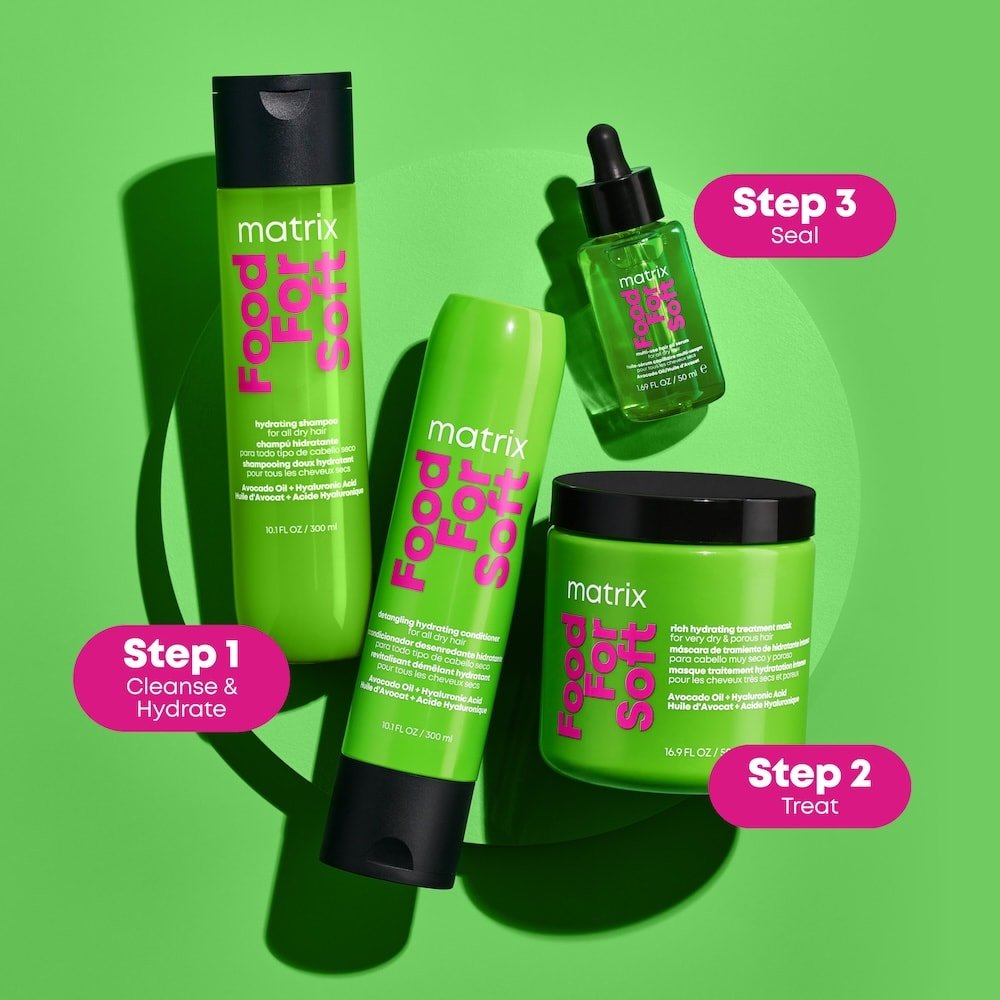
The Food For Soft line is built around hyaluronic acid, a small humectant molecule that low-porosity hair can actually absorb, paired with avocado oil for moisture sealing without heavy weight.
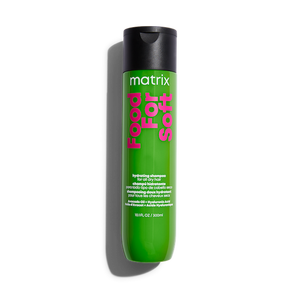
- Cleanse with Food For Soft Hydrating Shampoo, which is color-safe and gentle enough for daily use, infused with hyaluronic acid for moisture support that survives the wash. Apply to the scalp, and let the lather rinse through the lengths.
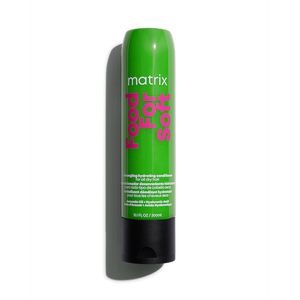
- Condition with Food For Soft Hydrating Conditioner, which combines hyaluronic acid and avocado oil to hydrate and detangle without buildup. Apply mid-lengths to ends, let sit three to five minutes (longer than for other hair types), rinse with lukewarm water, not cold.
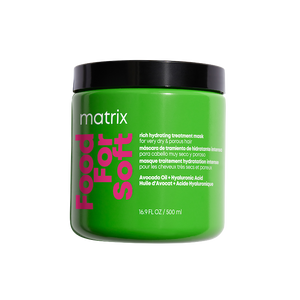
- Mask once a week with Food For Soft Rich Hydrating Treatment Mask, which delivers up to 72 hours of softness through a richer hyaluronic acid plus avocado oil formula engineered for parched hair. Mid-lengths to ends, 15 to 20 minutes under a warm damp towel. The warmth is what makes the difference.
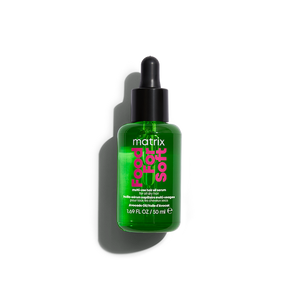
- Apply the oil while hair is damp with Food For Soft Multi-Use Hair Oil Serum, which seals moisture in and provides heat protection up to 450°F. A few drops through mid-lengths to ends. Avocado oil locks in hydration without sitting on top of the cuticle.
- Bond support once a week with Matrix Instacure Build-A-Bond, which uses citric acid to gently reinforce weakened bonds. Used as a full system (the Instacure Build-A-Bond shampoo, treatment, and mask together), it helps deliver up to 8x stronger hair. Useful even on undamaged hair as long-term insurance.
Low-porosity hair is not unhealthy hair. It is hair with a tightly sealed cuticle that resists the wrong products and rewards the right ones, especially when the routine pairs lightweight hydrators with a small assist from gentle warmth. The Food For Soft line is engineered for that absorption pattern, with hyaluronic acid as a small humectant molecule the cuticle can accept, avocado oil for sealing without buildup, and Matrix Instacure for periodic bond support. A Matrix stylist can prescribe how to sequence the routine and pair it with in-salon steam services that an at-home shower cannot match.
When to Book a Professional Consultation
To discover more about low-porosity hair care, schedule an appointment with a professional Matrix hair stylist for a one-on-one consultation. Our professional hair stylists will offer tailored advice and expert tips on getting moisture to absorb into resistant, low-porosity hair.
Find a Matrix salon near you to book a low-porosity hair consultation.
Next: What Is Hair Porosity and What It Means For Your Hair. Lear about hair porosity and the best Matrix products that align with your porosity type.